
Customer care
Use and care
To keep your Laguiole for decades, care for it properly. It only takes a minute.
How to take care of your Laguiole
A Laguiole en Aubrac knife, corkscrew or flatware set needs very little upkeep to last for generations. Three rules cover almost everything: wash by hand, dry right away, and keep natural handles away from heat and water.
-
Table knives and flatware
Wash by hand in warm water with a little mild dish soap, no hotter than 122°F (50°C), using a soft, non-abrasive sponge. Dry each piece right away with a soft cloth, even the stainless steel sets, and never leave them soaking.
-
Folding knives and corkscrews
Wipe the blade with a damp cloth rather than holding the knife under the tap, so water doesn’t get into the mechanism, then dry it. A drop of oil at the pivot, or on the lever and corkscrew hinges, now and then keeps the action smooth.
-
Never the dishwasher
The heat, the long cycle and harsh detergents dry out and crack natural handles, loosen the fittings and dull the edge. Dishwasher damage is not covered by the warranty. Every Laguiole en Aubrac piece is made to be washed by hand.

Laguiole knives don't like water
Wood, horn and bone are natural materials, and they don’t like water or heat. Never put a Laguiole in the dishwasher and never leave it soaking: wash it by hand, dry it thoroughly right away and store it in a dry place.
Caring for the handle
Each handle material needs its own small attention. Here is what to do for each.
-
Wood
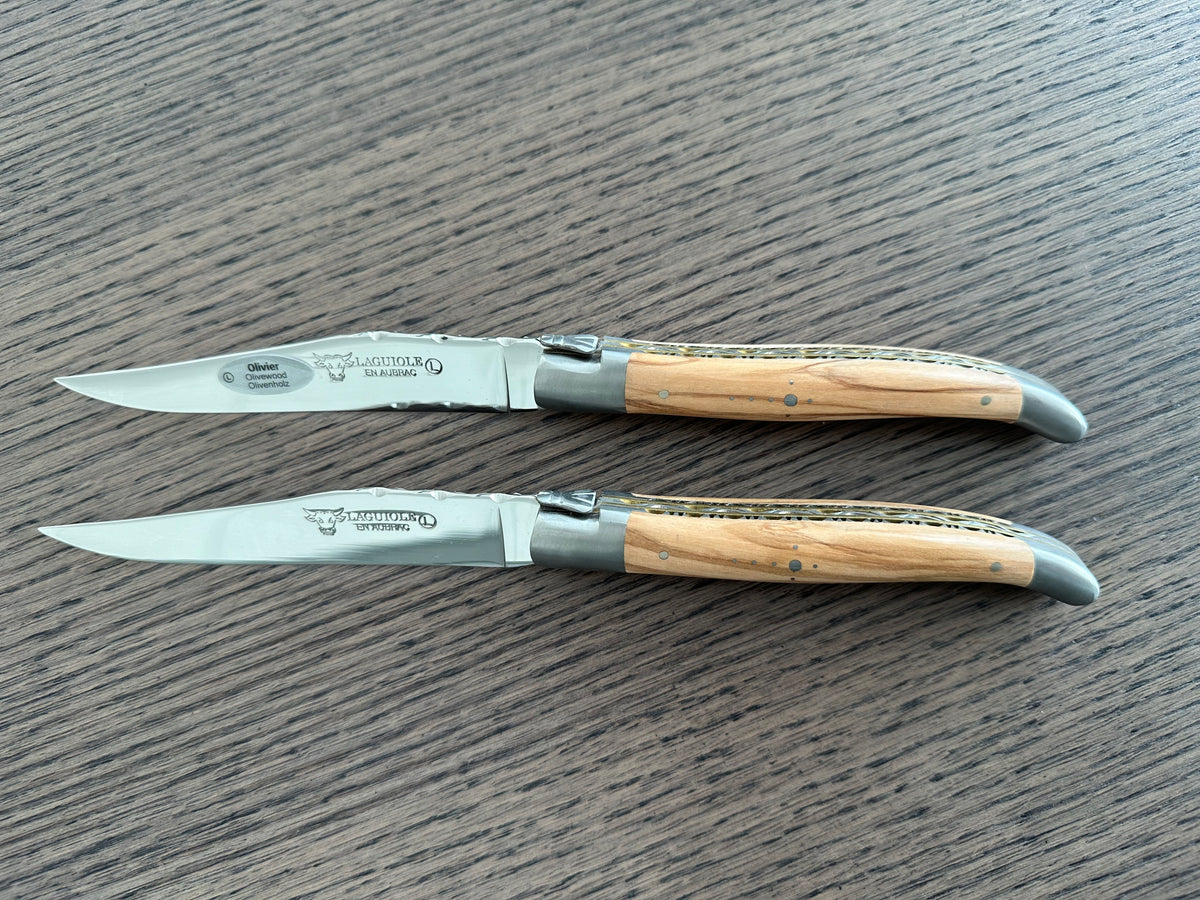
Olivewood, juniper, ebony, walnut, Aubrac beech and the other woods are living materials that deepen in color and take on a patina with use. Rub a little food-safe mineral oil into the wood once or twice a year to keep it rich and protected.
-
Horn
Solid horn, buffalo horn and ram horn are natural materials that can dry out over time. A drop of oil rubbed into the horn now and then keeps it supple. Keep horn away from prolonged heat and moisture.
-
Bone
Keep bone handles away from prolonged heat and moisture, and wipe them dry after washing, so they don’t dry out or crack.
-
Resin and composites
Shell resin, stabilized woods and composite handles are sealed and need no oiling. Wash, dry and wipe them with a soft cloth to bring back their shine.
-
Stainless steel
All-steel handles are the easiest to live with: wash by hand, dry right away to avoid water spots, and polish with a soft cloth.
-
Bolsters
The steel bolsters at each end of the handle only need a wipe with a damp cloth and a dry, soft cloth to keep their polished, brushed or matte finish.
Caring for the blade
Most Laguiole en Aubrac blades are Sandvik 12C27 stainless steel, a Swedish steel that keeps its edge and resists corrosion. Damascus blades need a little more care.
-
Sharpening
Sharpen on a stone soaked in water for about ten minutes, holding an angle of about 20 degrees along the whole edge. A fine stone or ceramic rod between sharpenings keeps it keen. Our sharpening and care kit has a stone, blade oil and wood care in one box.
-
Damascus blades
Carbon steel Damascus can rust if left wet. Dry it straight after use and wipe a thin film of oil on the blade before storing it. A light patina is normal and part of the steel’s character.
-
Storage
Store your knives in their box, a leather pouch or on a magnetic knife holder, so blades and bolsters don’t knock against other utensils and scratch. Keep them in a dry place.
Care questions
Can Laguiole knives go in the dishwasher?
No. Wood, horn, bone and other natural handles dry out, crack or loosen in the dishwasher, and the heat and harsh detergents dull the edge. Dishwasher damage is not covered by the warranty. Wash every Laguiole en Aubrac piece by hand and dry it right away.
What water temperature should I use?
Warm water with a little mild dish soap, no hotter than 122°F (50°C). Hotter water and strong detergents age natural handles early. Never leave knives or flatware soaking.
How do I clean a Laguiole folding knife or corkscrew?
Wipe the blade with a damp cloth and a drop of mild soap, then dry it, rather than holding the knife under the tap. Water that gets into the mechanism can stay there. A drop of oil at the pivot, or on the lever and corkscrew hinges, now and then keeps the action smooth.
How do I care for wood handles?
Wash, dry right away, and rub a little food-safe mineral oil into the wood once or twice a year. Wood is a living material: it deepens in color and takes on a patina with use, and regular handling is the best polish.
How do I care for horn and bone handles?
Horn is a natural material that can dry out over time: a drop of oil rubbed into the horn now and then keeps it supple. Keep bone handles away from prolonged heat and moisture, and wipe them dry after washing, so they don’t dry out or crack. Keep both away from radiators, direct sun and the dishwasher.
How do I sharpen a Laguiole knife?
Use a sharpening stone, soaked in water for about ten minutes first, and hold an angle of about 20 degrees, working the whole length of the edge. A fine stone or a ceramic rod between sharpenings keeps the edge keen. Smooth (non-serrated) blades are easy to resharpen at home.
How do I care for a Damascus blade?
Carbon steel Damascus can rust if left wet. Dry it straight after use and wipe a thin film of oil on the blade before storing it. A light patina is normal and part of the steel’s character.
How should I store my Laguiole?
In its box, a pouch or on a magnetic knife holder, so the blades and bolsters don’t knock against other utensils. Keep it in a dry place.
How to choose a Laguiole knife
Choosing a Laguiole can be hard with so many makers and models on the market. As a shop that sells only Laguiole en Aubrac, here is our straightforward advice. For more, read the best Laguiole knives.
-
Origin and maker's name
Make sure your knife comes from a reputable maker with a proven record. Laguiole en Aubrac, for instance, has handcrafted knives in the Aubrac since 1992.
-
Price, size and handle
Compare pocket knivesPrices vary with size, handle material and craftsmanship. Compare models and decide which features matter most to you.
-
The slip-joint mechanism
Traditional Laguiole knives use a slip-joint mechanism that holds the blade securely open. Check that your knife has it, for safe and comfortable use.
Customer care
Still have a question?
Write to us and a real person will help you, whether it's about an order, a handle or a gift.